CUMBRE VIEJA
CANARY ISLANDS, SPAIN
28.57000° N, 17.83000° W
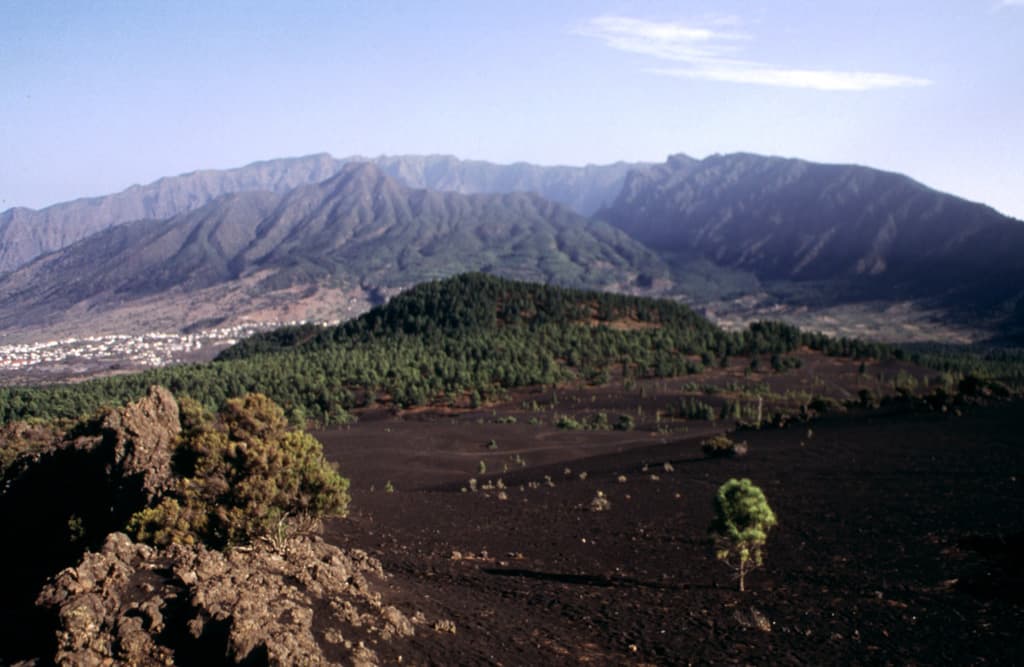
Photo: Smithsonian Institution National Museum of Natural History Global Volcanism Program
OVERVIEW
Cumbre Vieja forms the southern part of the island of La Palma in the Canary Islands
The 47-km-long wedge-shaped island of La Palma, the NW-most of the Canary Islands, is composed of two large volcanic centers. The older northern one is cut by the steep-walled Caldera Taburiente, one of several massive collapse scarps produced by edifice failure to the SW. On the south, the younger Cumbre Vieja volcano is one of the most active in the Canaries. The elongated volcano dates back to about 125,000 years ago and is oriented N-S. Eruptions during the past 7,000 years have formed abundant cinder cones and craters along the axis, producing fissure-fed lava flows that descend steeply to the sea. Eruptions recorded since the 15th century have produced mild explosive activity and lava flows that damaged populated areas. The southern tip of the island is mantled by a broad lava field emplaced during the 1677-1678 eruption. Lava flows also reached the sea in 1585, 1646, 1712, 1949, 1971, and 2021. Description from the Global Volcanism Program website.
RECOMMENDED FOR YOU
Related reading
No articles found for cumbre-vieja.
SITES AND INSTRUMENTS
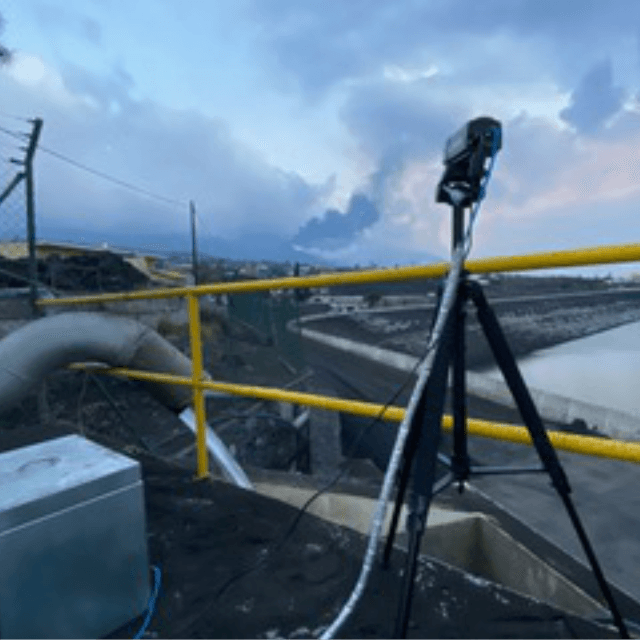
Cumbre Vieja Site 1
Infrared Imagery
Images can be viewed in the image browser or you can request through the API, which is given under Data Access.